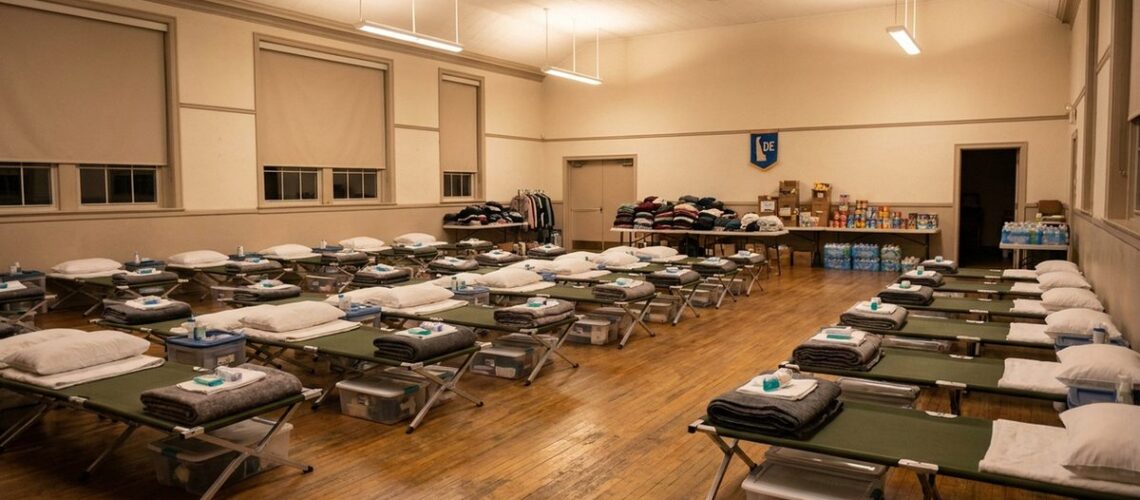
Understanding Homelessness in Delaware
Delaware's homelessness crisis affects thousands of individuals and families each year. According to the most recent HUD Point-in-Time count conducted in January 2024, an estimated 1,358 people were experiencing homelessness on a single night across the state. Of those, 238 were unsheltered — sleeping in cars, parks, abandoned buildings, or on the streets.
The data presented on this page comes directly from the U.S. Department of Housing and Urban Development (HUD) Annual Homeless Assessment Report and the Point-in-Time (PIT) counts conducted by the Delaware Continuum of Care (CoC DE-500). These counts represent the most authoritative snapshot of homelessness available, though advocates widely agree that actual numbers are significantly higher than what a single-night count captures.
Delaware's response to homelessness involves a network of emergency shelters, transitional housing programs, rapid rehousing initiatives, and permanent supportive housing — coordinated through the Delaware Interagency Council on Homelessness (DICH) and local service providers. This page serves as both a data resource and a practical guide for anyone seeking help or trying to understand the scope of the crisis.
Delaware Homeless Population: 2024 Point-in-Time Data
The Point-in-Time count is a federally mandated, annual census of people experiencing homelessness on a single night in January. It captures both sheltered individuals (those in emergency shelters and transitional housing) and unsheltered individuals. Below, we present seven years of Delaware PIT data to show how the crisis has evolved.
Year-by-Year Breakdown: Sheltered vs. Unsheltered
The table below provides the full breakdown of Delaware's PIT counts by shelter status, household composition, and special populations. Notice the sharp increase in 2022 — this is largely attributed to changes in counting methodology during the COVID-19 pandemic, when hotels and motels used as emergency shelter were included in the count for the first time.
Emergency Housing Options in Delaware
When someone in Delaware faces an immediate housing crisis, several pathways exist depending on their situation — single adults, families with children, veterans, and domestic violence survivors each have dedicated entry points into the shelter system.
Emergency Shelters in Wilmington
Wilmington serves as the primary hub for emergency shelter services in Delaware. The Sunday Breakfast Mission on North Washington Street provides overnight emergency beds for men, along with addiction recovery programs and transitional housing. The Friendship House day center at 22 N. Walnut Street offers daytime shelter, meals, and access to empowerment programs — connecting individuals with the resources they need to stabilize their lives.
For women and families, the YWCA Delaware operates emergency shelter with wraparound services including case management, employment assistance, and children's programming. The People's Place in Dover extends shelter access to Kent County, serving families and individuals south of the canal.
Transitional Housing Programs
Transitional housing bridges the gap between emergency shelter and permanent housing. These programs typically provide housing for up to 24 months, paired with intensive case management, life skills training, employment support, and financial literacy education. In Delaware, organizations like Connections Community Support Programs (CSP), the Ministry of Caring, and Interfaith Community Housing of Delaware operate transitional programs across New Castle County.
For veterans, the Delaware Center for Homeless Veterans in Wilmington provides dedicated transitional housing with veteran-specific support services, including VA benefits navigation, peer mentorship, and employment connections through the Department of Labor's VETS program.
Rapid Rehousing
Delaware's rapid rehousing programs aim to move people from homelessness into permanent housing as quickly as possible, providing short-term rental assistance and case management. The Delaware State Housing Authority (DSHA) coordinates the Emergency Solutions Grant (ESG) program, which funds rapid rehousing through local nonprofit providers. Eligibility is determined through the coordinated entry system — individuals and families can access this by calling Delaware 211.
Special Populations
Veterans Experiencing Homelessness in Delaware
In 2024, HUD counted 89 veterans experiencing homelessness in Delaware. The VA's Supportive Services for Veteran Families (SSVF) program and HUD-VASH (Veterans Affairs Supportive Housing) vouchers are the primary federal tools for ending veteran homelessness in the state. The Delaware Center for Homeless Veterans operates a 35-bed transitional facility in Wilmington, providing structured housing and support for veterans working toward independence.
Women and Families
Families with children represented a significant portion of Delaware's homeless population in 2024, with 555 persons in families experiencing homelessness. Women fleeing domestic violence have access to confidential shelter through the Delaware Coalition Against Domestic Violence and its member agencies, including the YWCA, the CONTACT Lifeline, and the People's Place.
Chronic Homelessness
Chronically homeless individuals — those with a disability who have been homeless for at least 12 months or on four or more occasions in the last three years — numbered 238 in Delaware's 2024 count. Permanent supportive housing (PSH) is the evidence-based solution for chronic homelessness, combining affordable housing with voluntary, flexible support services. Delaware operates approximately 500 PSH units through various providers, but the demand consistently exceeds supply.
How to Get Help
If you or someone you know is experiencing homelessness or a housing crisis in Delaware, here are the immediate steps:
- Call 211: Delaware's 211 helpline is the front door to the coordinated entry system. Trained specialists will assess your situation and connect you with appropriate services, including shelter, food, and financial assistance.
- Visit Friendship House: Located at 22 N. Walnut St in Wilmington, Friendship House provides daytime shelter, clothing through the Clothing Bank of Delaware, empowerment programs, and referrals to housing services.
- Contact your local shelter directly: For immediate overnight shelter, reach the Sunday Breakfast Mission at (302) 652-8314 (men) or the YWCA at (302) 658-7161 (women and families).
- Veterans: Call the VA's National Call Center for Homeless Veterans at (877) 424-3838, available 24/7.
Sub-Topic Guides
For more detailed information on specific aspects of Delaware's homelessness crisis and available resources, explore these focused guides:
The Coordinated Entry System in Delaware
Delaware operates a statewide Coordinated Entry System (CES) — a standardized process designed to match people experiencing homelessness with the most appropriate housing intervention based on their vulnerability and needs. The CES is mandated by HUD for all Continuums of Care and serves as the "front door" to the homeless services system.
When an individual or family contacts Delaware 211 or presents at an access point (such as a shelter or service agency), they undergo a standardized assessment using the Vulnerability Index-Service Prioritization Decision Assistance Tool (VI-SPDAT). This assessment generates a score that determines priority level for available housing resources. Those with the highest vulnerability scores are prioritized for permanent supportive housing, while others may be matched with rapid rehousing, transitional housing, or prevention services.
Access points for Coordinated Entry in Delaware include the Sunday Breakfast Mission, Friendship House, the YWCA, People's Place, and several other agencies. The system is designed to ensure that anyone experiencing a housing crisis can enter the system from any point and be assessed consistently.
Key Trends in the Delaware PIT Data
The 2022 Spike Explained
The most striking feature of the multi-year trendline is the sharp increase in 2022, when Delaware's total homeless count reached 2,369 — nearly double the 2020 figure. This does not necessarily mean homelessness doubled overnight. Instead, the spike is primarily attributed to changes in counting methodology during the COVID-19 era. Federal emergency programs placed thousands of individuals in hotels and motels as emergency shelter; for the first time, these placements were counted in the PIT data. The 2022 emergency shelter count of 2,002 reflects this expanded definition. As pandemic-era hotel programs ended, the 2023 and 2024 counts returned to levels more consistent with the pre-pandemic trend.
Unsheltered Homelessness Is Rising
While the total count fluctuates with methodology changes, the unsheltered count tells a more consistent — and concerning — story. In 2017, only 58 people were counted as unsheltered in Delaware. By 2024, that number had risen to 238, a four-fold increase. This trend reflects a growing gap between the demand for shelter beds and available capacity, particularly during summer months when overflow shelters (typically operating only in winter) are closed.
The unsheltered population is disproportionately composed of individuals with chronic health conditions, substance use disorders, and mental illness — populations that often face the greatest barriers to accessing traditional shelter services. Street outreach teams from organizations like Connections CSP and the Ministry of Caring work to engage unsheltered individuals and connect them with services, but capacity limitations remain a persistent challenge.
Veterans: Progress and Challenges
Delaware has made measurable progress in reducing veteran homelessness. The 2017 count identified 91 homeless veterans; by 2024, this had declined to 89 despite an overall increase in total homelessness. This relative stability (and slight decline) reflects the effectiveness of targeted federal programs — particularly HUD-VASH and SSVF — that provide housing vouchers and rapid rehousing specifically for veterans. However, Delaware has not yet achieved "functional zero" for veteran homelessness, the federal benchmark indicating that the system can house veterans as quickly as they become homeless.
Delaware's Continuum of Care: How the System Works
The Delaware Continuum of Care (CoC DE-500) is the HUD-designated planning body responsible for coordinating the state's response to homelessness. The CoC is a collaborative of government agencies, nonprofit service providers, advocates, and people with lived experience of homelessness. It is responsible for conducting the annual PIT count, submitting the consolidated application for HUD McKinney-Vento funding, and overseeing the Coordinated Entry System.
The CoC's governance structure includes an executive committee, a full membership body, and several standing committees focused on specific populations (veterans, families, youth, chronically homeless). The Delaware Interagency Council on Homelessness (DICH), created by executive order, serves as the state-level coordinating body and works in concert with the CoC to align state and federal resources.
HUD requires each CoC to set measurable goals for reducing homelessness and to report progress through the Longitudinal Systems Analysis (LSA) — a data submission that tracks how people move through the homeless services system over time. Delaware's performance on key metrics, including length of time homeless, returns to homelessness, and exits to permanent housing, is compared against national benchmarks and informs funding decisions.
Prevention: Stopping Homelessness Before It Starts
While emergency shelter and housing programs are essential for people already experiencing homelessness, prevention represents the most cost-effective approach. Delaware's prevention programs focus on several key strategies:
- Emergency Rental Assistance: Administered through the Delaware State Housing Authority and local providers, emergency rental assistance helps families facing eviction stay in their homes. The program covers back rent, utility arrears, and in some cases, security deposits for new housing.
- Legal Aid for Eviction Defense: Delaware Volunteer Legal Services and Community Legal Aid Society provide free legal representation to low-income tenants facing eviction, helping to ensure due process and negotiate alternatives to displacement.
- Diversion at Shelter Entry: When individuals present at a shelter, diversion specialists explore alternatives — can the person stay with a friend or family member temporarily? Can a landlord-tenant dispute be mediated? Diversion is not about turning people away; it's about finding the most appropriate solution, which may not always be shelter.
- Financial Literacy and Budgeting: Several organizations, including Interfaith Community Housing of Delaware and DCRAC, offer financial counseling, budgeting workshops, and credit repair services to help families build the financial stability needed to maintain housing.
Frequently Asked Questions
How accurate are the PIT counts?
PIT counts are the best available snapshot, but they are widely acknowledged as undercounts. They capture people in shelters on a single night, plus unsheltered individuals found by volunteer counters during a brief observation period. People who are doubled up, couch-surfing, living in motels at their own expense, or in locations not reached by counters are not included. Research suggests the actual number of people experiencing housing instability in any given community may be two to three times higher than the PIT count.
What is the difference between sheltered and unsheltered homelessness?
Sheltered homelessness means a person is sleeping in an emergency shelter, transitional housing program, or safe haven. Unsheltered homelessness means a person is sleeping in a place not meant for human habitation — a car, park, abandoned building, under a bridge, or on the street. Both groups meet HUD's definition of homelessness, but they often have very different service needs and barriers.
Why doesn't Delaware have more shelter beds?
Shelter capacity is constrained by funding, zoning regulations, and community opposition (sometimes called NIMBYism). Operating an emergency shelter requires 24/7 staffing, facilities maintenance, food service, and case management — costs that average $50-80 per person per night. Many advocates argue that resources are better spent on permanent housing solutions (rapid rehousing, permanent supportive housing, affordable housing development) rather than expanding emergency shelter capacity. The challenge is balancing immediate need with long-term systemic change.
How can I help?
There are many ways to contribute to ending homelessness in Delaware. Volunteer with a local shelter or food bank. Donate clothing to the Clothing Bank of Delaware through Friendship House. Advocate for affordable housing policies by contacting your elected officials. If you work in real estate, consider participating in a landlord engagement program that encourages renting to voucher holders. Visit our Get Involved page for specific opportunities.
Data Sources & Methodology
All statistical data on this page is sourced from the U.S. Department of Housing and Urban Development (HUD) Point-in-Time (PIT) count reports, as published on the HUD Exchange. The PIT count is conducted annually (typically in the last 10 days of January) by the Delaware Continuum of Care (CoC Code: DE-500).
The 2021 PIT count was not conducted due to the COVID-19 pandemic, which is why that year is absent from the data. The 2022 spike reflects expanded counting methodology that included hotel/motel placements funded by emergency COVID relief programs.
These counts represent a conservative estimate. Individuals who are "doubled up" with friends or family, or living in motels at their own expense, are not captured by the HUD definition of homelessness used in PIT counts. The actual number of Delawareans experiencing housing instability is substantially higher than the figures presented here.